 Today is: Monday, Date is: 26-10-2026, Time is: 09:31:23 PM Local Time IST
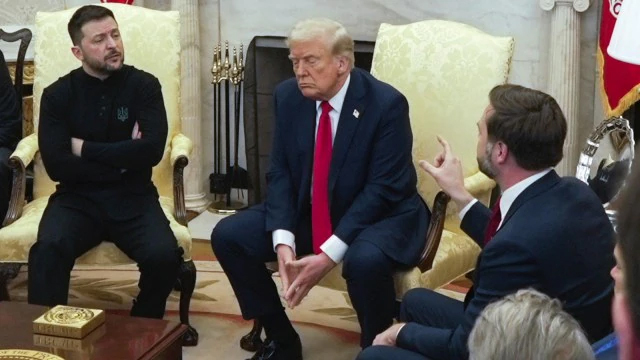
Trump, Zelenskyy and the hypocrisy of ‘polite’ diplomacy
Outrage over Trump’s treatment of the Ukrainian president distracts from the long history of Euro-American leaders who bullied and damaged the world in pursuit of their countries’ interests By one account, between the end of World War II and the opening decade of the 21st century, the United States had carried out operations to destabilise, overthrow and supplant foreign governments in over 70 countries. In the late 1940s, with President Harry S Truman in power, the US intervened in Greece on behalf of pro-monarchist forces against Communist ones; in 1953, during the Eisenhower presidency, the US was involved in the overthrow of Iranian prime minister Mohammad Mosaddegh and the restoration of the autocracy of the Shah; in 1960, also under Eisenhower, CIA-supported activities led to the assassination of the president of the Congo, Patrice Lumumba; from the mid-1960s to the mid-1970s, the actions of a variety of US presidents led to the Vietnam war; and, in 1973, during the Nixon presidency, American support led the establishment of the murderous regime of Augusto Pinochet in Chile. The American political schedule as “leader of the free world” is a very extensive one indeed. Over the past few days, there has been a great deal of public commentary decrying the “bullying” and “rudeness” displayed by Donald Trump and his deputy J D Vance towards the Ukrainian head of state, Volodymyr Zelenskyy. Trump’s presidency has been singled out as a completely new era of “American imperialism”, one marked by crassness of language, lack of diplomatic niceties, sexism and undisguised misogyny. Nothing troubles Euro-American (and, quite often, Indian) liberalism more than the lack of table manners. The manner in which the Trump presidency has come for criticism and condemnation would seem to suggest that it is qualitatively different from those of his predecessors, those that bullied and damaged the world in the name of promoting and preserving democratic values. The current episode is, however, primarily about the need to have table manners when conducting the affairs of the world. Story continues below this ad Under Barack Obama, as a 2017 report by The Guardian newspaper noted, “President Obama did reduce the number of US soldiers fighting in Afghanistan and Iraq, but he dramatically expanded the air wars and the use of special operations forces around the globe”. And that, “In 2016, US special operators could be found in 70 per cent of the world’s nations, 138 countries — a staggering jump of 130 per cent since the days of the Bush administration”. However, Obama is a very polite man and has a firm hold on table manners. Barring the rudeness factor, American dealings with the world under the Trumpist Make America Great Again (MAGA) era are no different. The key role of the idea of a very rude current American president is to paint the American past — and past American presidents — as better. This, in turn, is linked to the idea of Vladimir Putin as a power-hungry madman, acting in ways that are both incomprehensible and beyond European “civilisational values”. European civilisational values and table manners, we should remember, flourished alongside European colonial endeavours. King Leopold II (1835-1909) of Belgium constructed some very beautiful buildings in Brussels through wealth extraction from Congo based on forms of brutality that no other colonial power could match. Ideas of a rude Trump and an “uncivilised” Putin — along with a “heroic” Zelenskyy — allow Western governments and media commentators to present the situation as a simple confrontation between politeness and civility on the one hand and madness and megalomania on the other. The issue of Ukraine’s membership to NATO and Putin’s objection to it is not a simple matter of a mad head of state bullying a much smaller country into submission. It has everything to do with the nature of the modern nation-states: Wherever possible, each acts to defend its perceived interests. In this, the Russian nation-state is no different from others. It is not any more imperial in its ambitions than, say European ones. It is worth remembering that France and the United States continue to hold territories that they acquired during the heydays of their own imperial ambitions.


Give Your Comment Below