
 Today is: Monday, Date is: 26-10-2026, Time is: 08:26:30 PM Local Time IST
SAU students clash: Hostel food can’t be discriminatory
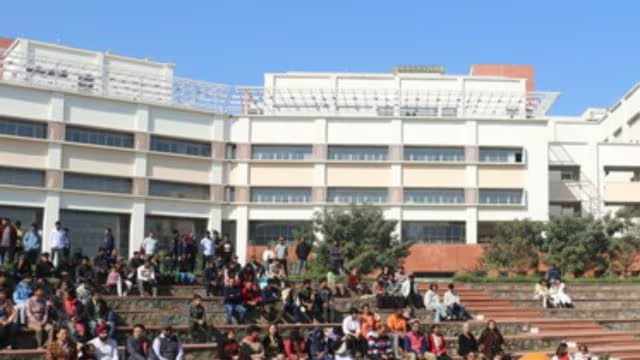
41% skip to content Indian Express Logo Journalism of Courage Subscribe My Account Express opinion Editorials Columns NewsOpinionColumnsSAU students clash: Hostel food can't be discriminatory Opinion by SAU students clash: Hostel food can’t be discriminatory The serving of meat in SAU during Maha Shivratri led to some students, allegedly from the ABVP, unleashing violence in the hostel mess. It reasserts the fact that eating meat is seen as an act of resistance to hegemonic food habits. This becomes further complicated in a space like South Asian University (SAU), which is both constitutionally and characteristically international. This becomes further complicated in a space like South Asian University (SAU), which is both constitutionally and characteristically international. (http://gallery.sau.ac.in/) Mar 3, 2025 11:52 IST share-btn Share comment-btn Comments prrint-btn Print Written by Rituparna Patgiri With the rising migration of students from villages, suburbs, and towns to larger cities and metropolises, university hostels have increasingly become a preferred and affordable choice for accommodation. Hostels serve as spaces that promote socio-cultural exchange through diverse interactions, as well as events and activities. Story continues below this ad One of the most important amenities in the hostels is the mess, which is run by people who are chosen by the university (mostly through tenders), in consultation with a mess committee which includes student representatives. Fixing the mess menu is seen as a difficult task, especially in a country like India. Most central universities have students from all parts of the country, which have diverse food habits. Thus, the mess committee often draws criticism from hostellers. This becomes further complicated in a space like South Asian University (SAU), which is both constitutionally and characteristically international. The university includes students from not just India, but also Pakistan, Afghanistan, Nepal, Sri Lanka, Bangladesh, Bhutan and Maldives among many others. The recent scuffle among the students over serving non-vegetarian food during Maha Shivratri hints at social cleavage that underlies its apparently inclusive and diverse culture. Generally, most hostels of the public universities located in New Delhi have a set menu for the month. But on occasions like festivals, they make special arrangements. For instance, food items like gujiya are served on Holi, as well as iftar is given to fasting students during Ramzan. But if one looks at the menus, one will notice a dominance of north Indian food habits, with some food items from southern and western parts of the country. In my 2022 study on public university hostel food in New Delhi, I found that students from northeast India find these spaces alienating. Hostels claim to promote inclusivity and a sense of community among their residents. However, this idea of inclusion is questioned by students from northeast India who find their food items missing from the menus. While they understand that they are expected to eat local and other food, they ask why their food can’t be served as well.


Give Your Comment Below